
2. Optimize On-Page SEO Elements
On-page SEO elements inform crawlers about visual hierarchies and assist Google’s NLP (Natural Language Processing) engines in indexing your page’s semantic value. Implementing these elements correctly is one of the 10 effective ways to improve Google rankings with SEO.
Key On-Page Signals
- Title Tags: Keep titles under 60 characters to prevent clipping in search results. Ensure the primary target keyword is placed near the beginning. This is one of the 10 effective ways to improve Google rankings with SEO that can improve click-through rates and relevance.
- Meta Descriptions: Write compelling, click-worthy summaries between 150 and 160 characters that end with a strong Call-To-Action (CTA).
- Header Tags (H1, H2, H3): Maintain a strict hierarchical heading system. Ensure there is only one H1 tag per page (acting as the main book title), supported chronologically by H2 and H3 tags.
- Alt Text Optimization: Add descriptive alternative text to every image. This supports web accessibility requirements and helps your images index in Google Image Search.
- Target URL Slugs: Ensure your target URLs are clear and readable. Remove filler words (such as and, the, or, with) to maximize impact and focus. Optimizing URL structures is among the 10 effective ways to improve Google rankings with SEO because it helps search engines and users understand page relevance more effectively.
3. Create High-Quality, User-Focused Content
Google prioritizes content that exhibits EEAT (Experience, Expertise, Authoritativeness, and Trustworthiness). Creating content based on the 10 effective ways to improve Google rankings with SEO helps demonstrate expertise and provide genuine value to users. Low-quality, thin, or AI-generated filler content without unique value will experience rapid ranking decay.
Solve Specific Problems: Your copy must answer searchers’ questions faster and more thoroughly than any competing page on the search results page. This approach aligns with the 10 effective ways to improve Google rankings with SEO by satisfying user intent.
Integrate First-Hand Insights: Include proprietary data, charts, real-world case studies, and quote recognized industry specialists.
Optimize for Dwell Time: Break up long text blocks using short paragraphs (2–3 sentences max), descriptive subheadings, clean bullet points, and relevant visual assets.
Eliminate Fluff: Write clearly and directly. Ensure your main focus answers are positioned near the top of the page layout.
4. Improve Website Speed and Performance
Website Optimization speed directly impacts search visibility and user satisfaction. A slow-loading page frustrates users and leads to high bounce rates, sending negative signals to ranking algorithms. Improving page speed is one of the 10 effective ways to improve Google rankings with SEO that directly affects both rankings and user experience.
Essential Core Web Vitals to Track
Largest Contentful Paint (LCP): Measures perceived loading speed. The page’s main content should load in 2.5 seconds or less.
Interaction to Next Paint (INP): Measures overall responsiveness. Input latency should remain under 200 milliseconds.
Cumulative Layout Shift (CLS): Measures page stability. Elements should not shift unexpectedly as the page loads; maintain a score below 0.1.
5. Optimize for Mobile Devices
Since Google operates on a strict mobile-first indexing model, your site’s mobile layout is treated as the primary version for evaluation and ranking. Mobile optimization remains one of the 10 effective ways to improve Google rankings with SEO because it directly influences usability and search performance.
Mobile Optimization Priorities
Implement Fully Responsive Frameworks: Ensure all layout assets scale smoothly to match any desktop, tablet, or smartphone viewport.
Ensure Large Touch Targets: Interactive elements, buttons, and links must have sufficient spacing and size to prevent misclicks on touch screens.
Keep Typography Readable: Text sizes should never drop below 16px on mobile to avoid horizontal scrolling or pinch-to-zoom actions.
Streamline Mobile Menus: Avoid complex desktop navigation panels. Use clean accordion drawers or compact hamburger menus instead.
6. Build High-Quality Backlinks
Backlinks act as digital votes of confidence across the web. Google treats links from authoritative, contextually relevant sources as a strong indicator of your site’s credibility. Building quality backlinks remains one of the 10 effective ways to improve Google rankings with SEO because it strengthens domain authority and trust.
White-Hat Authority Building Tactics
Publish Data-Driven Assets: Conduct surveys, compile industry benchmarks, or draft case studies. Other websites will naturally link to your original research.
Secure Thought Leadership Placements: Submit high-value guest editorials to reputable industry blogs and digital publications.
Implement Digital PR: Pitch quotes and insights to journalists through platforms like HARO (Connectively) or SourceBottle.
Reclaim Broken Links: Find broken links on high-authority resource pages in your niche and pitch your active content as an optimized replacement.
7. Strengthen Internal Linking
Internal links guide search engines through your site’s architecture and distribute accumulated “link juice” (authority) to your target URLs. Effective internal linking is one of the 10 effective ways to improve Google rankings with SEO because it helps search engines understand content relationships.
Strategic Internal Linking Rules
Use Descriptive Anchor Text: Avoid generic tags like “click here” or “read more.” Instead, use descriptive anchor phrases like “learn more about keyword mapping strategies.”
Adopt Topic Cluster Models: Create a main “pillar” resource page that links out to more specific “spoke” articles, then link those spokes back to the main pillar.
Link High-Authority Pages to New Content: Find your top-performing, high-traffic pages and use them to link to new, related articles to speed up indexing.
8. Enhance User Experience (UX)
Improving your user experience encourages visitors to stay on your site longer, interact with more pages, and convert into customers. Enhancing UX is among the 10 effective ways to improve Google rankings with SEO because Google prioritizes websites that provide a positive user experience.
Critical UX Checklist
Simplify Site Navigation: Keep your layout intuitive; users should be able to find any page on your site in three clicks or less.
Eliminate Aggressive Interstitials: Avoid using intrusive pop-ups and full-screen ad overlays, particularly on mobile devices.
Maintain Clear Visual Hierarchies: Use contrasting font sizes, background colors, and whitespace to guide the reader’s eye down the page.
Implement Prominent CTAs: Ensure buttons like “Get Started” or “Download Free Guide” are easy to spot and well-spaced.
9. Implement Technical SEO Best Practices
Technical optimization is one of the 10 effective ways to improve Google rankings with SEO because it creates a strong foundation for search engine visibility. SEO best practices ensures search engines can easily crawl, render, and index your website without running into structural issues or errors.
Core Technical Elements to Address
HTTPS Security: Ensure your entire site runs on a secure connection using an SSL certificate. This is a baseline ranking signal.
Dynamically Updated XML Sitemaps: Keep your sitemap updated and submit it to Google Search Console to help search crawlers find new pages quickly.
Proper Robots.txt Configuration: Use your robots.txt file to guide search crawlers toward your valuable content while blocking access to private or duplicate pages (like admin folders).
Self-Referencing Canonical Tags: Use canonical tags on every page to prevent duplicate content issues when similar content is accessible through multiple URLs.
Structured Data Schema Markup: Add structured data (like Article, FAQ, or Product schema) to help Google display your content as rich snippets in search results.
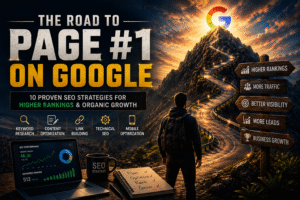
10. Monitor and Update Content Regularly
SEO is an ongoing process. Even high-ranking content will eventually lose relevance as competitors update their pages, search intent shifts, or information becomes outdated. Regular content updates are one of the 10 effective ways to improve Google rankings with SEO because they help maintain relevance and search visibility over time.
Content Refresh Checklist
Identify Underperforming Pages:
Find pages that have dropped in rankings using Google Search Console.
Update Outdated Details:
Replace old statistics, outdated dates, and broken external links with current information.
Optimize for Click-Through Rate (CTR):
Test new, more engaging title tags and meta descriptions to improve your CTR.
Identify and Fix Content Decay:
Expand on thin sections by adding more depth, answering new user questions, and integrating relevant media. Following these practices supports the 10 effective ways to improve Google rankings with SEO and helps sustain long-term organic growth.
Search Directory: Frequently Asked Questions on Improving Google Rankings
1. What is SEO?
SEO (Search Engine Optimization) is the strategic process of improving a website’s infrastructure, code, and content to enhance organic visibility in search engine result pages (SERPs) like Google.
2. How long does SEO take to show results?
Most websites see measurable organic rankings and traffic improvements within 3 to 6 months. This timeline depends on competition levels, keyword difficulty, content quality, and domain authority.
3. Why are Google rankings important?
Higher rankings place your site directly in front of active searchers. This increases organic visibility, brand authority, relevant traffic, leads, and sales conversions.
4. What is keyword research?
Keyword research is the process of identifying search queries your target audience uses to find answers or solutions online, helping guide your content strategy.
5. How does content affect SEO?
High-quality, relevant content matches user search intent, keeps visitors on your page longer, and earns natural backlinks, helping improve your rankings as part of the 10 effective ways to improve Google rankings with SEO.
6. What are backlinks?
Backlinks are links from other websites pointing to your own. Google sees high-quality backlinks as votes of trust, which can significantly improve your search rankings.
7. Why is mobile optimization important?
Because Google uses mobile-first indexing, the mobile-friendly design and performance of your site are critical ranking factors.
8. What is technical SEO?
Technical SEO is the process of optimizing your website’s infrastructure—like page speed, secure connections, and clean site architectures—so search engines can crawl and index your content easily.
9. How often should I update content?
Reviewing and updating your top-performing articles every 6 to 12 months helps keep statistics, links, and details current, helping preserve search visibility.
10. What is search intent?
Search intent is the primary goal a user has when searching for a query on Google. Content that matches intent (e.g., informational, commercial, transactional, or navigational) naturally ranks better.
11. Does page speed affect rankings?
Yes, page speed is a confirmed ranking signal. Faster websites improve user engagement and help visitors find information quickly, which supports higher organic rankings.
12. What are Core Web Vitals?
Core Web Vitals are a set of specific user-focused metrics Google uses to evaluate web page load performance, layout stability, and responsiveness.
13. Can SEO help small businesses?
Absolutely. SEO is one of the most cost-effective marketing strategies for small businesses, helping establish niche local authority without heavy ad spend.
14. What is internal linking?
Internal linking connects individual pages on your website, sharing authority and helping search engines understand your overall content structure.
15. Is SEO still relevant in 2026?
Yes, SEO is highly relevant. While search continues to evolve with AI overviews and conversational answers, optimizing content structures remains critical for visibility across search platforms. Businesses that implement the 10 effective ways to improve Google rankings with SEO will be better positioned to adapt to future search trends and maintain long-term organic success.