
Introduction
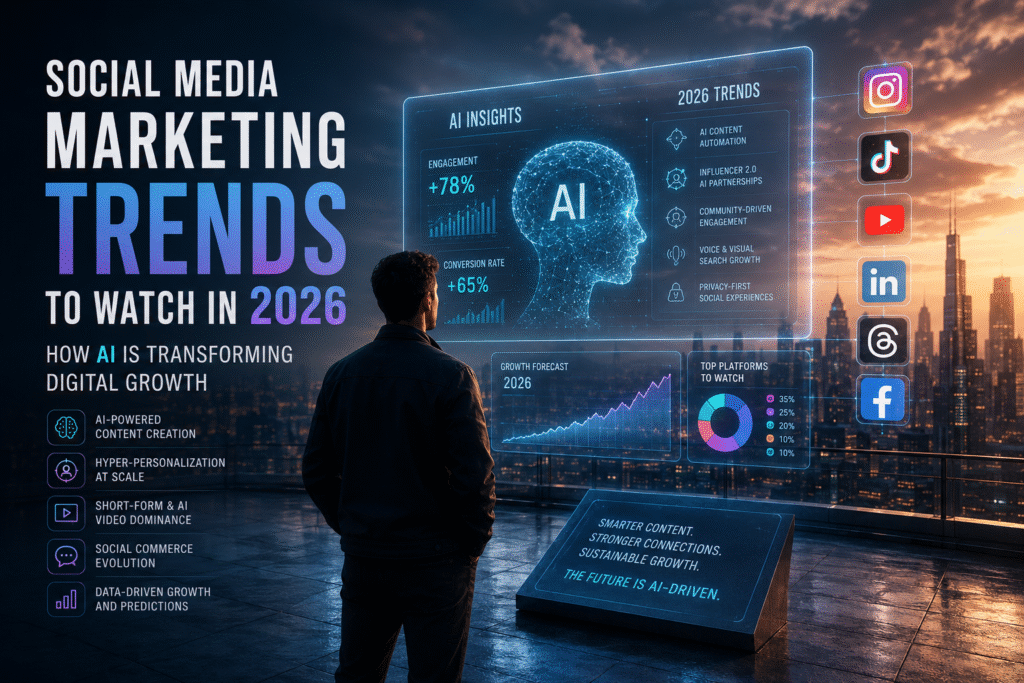
The digital marketing landscape is evolving at an unprecedented pace. Every year brings new technologies, changing customer expectations, and platform updates that reshape how brands communicate with their audiences.
From content creation and customer engagement to predictive analytics and social commerce, Artificial Intelligence is revolutionizing the way businesses approach social media marketing. What was once a tool used by large corporations is now accessible to businesses of all sizes, allowing marketers to automate processes, personalize customer experiences, and make smarter decisions based on real-time data.
The future of social media marketing is no longer about simply posting content and hoping for engagement. Instead, brands are using Artificial Intelligence to understand audience behavior, create targeted campaigns, optimize performance, and build meaningful relationships with customers.
Understanding the latest social media marketing trends is essential for businesses that want to remain competitive. Companies that embrace AI early will gain a significant advantage by improving efficiency, increasing engagement, and maximizing return on investment. In this comprehensive guide, we explore the most important social media marketing trends for 2026 and examine how AI is transforming digital growth across every stage of the customer journey.
Why AI Will Dominate Social Media Marketing in 2026
Over the past few years, advanced technologies have evolved from emerging innovations into critical business tools. Today, marketers use intelligent platforms to generate content, analyze customer behavior, automate workflows, and improve campaign performance.
The adoption of these technologies is accelerating because businesses are under increasing pressure to produce more content, engage customers across multiple platforms, and deliver personalized experiences. Traditional marketing methods often require significant time and resources, making it difficult to keep up with changing consumer expectations.
With modern automation tools, businesses can:
Automate repetitive marketing tasks
Generate content quickly
Analyze large datasets efficiently
Improve customer targeting
Optimize advertising campaigns
Predict future trends
As competition grows across social platforms, businesses that leverage these capabilities effectively will be better positioned to achieve sustainable growth.
Trend 1: AI-Powered Content Creation Becomes the New Standard
Content remains the foundation of every successful social media strategy. However, the process of creating content is undergoing a major transformation.
Modern content generation tools can create blog posts, social media captions, video scripts, ad copy, product descriptions, and email campaigns within minutes. Instead of spending hours brainstorming ideas and writing drafts, marketers can accelerate content production while maintaining quality and consistency.
The rise of automated content creation offers several benefits:
Faster Content Production
Businesses can create weeks of content in a fraction of the time previously required.
Improved Consistency
These tools help maintain consistent messaging, tone, and branding across multiple channels.
Enhanced Productivity
Marketing teams can focus on strategy and creativity while automated systems handle repetitive tasks.
Lower Costs
Automating content generation reduces the resources required for content production.
While these technologies significantly improve efficiency, successful brands will continue combining human creativity with advanced automation to create authentic and engaging content.
Trend 2: Hyper-Personalization Through AI
Consumers expect personalized experiences more than ever before. Generic marketing messages are becoming less effective because users prefer content that matches their interests, preferences, and online behavior.
This is where Artificial Intelligence plays a crucial role. Advanced systems can analyze:
- Browsing behavior
- Purchase history
- Content preferences
- Engagement patterns
- Demographic information
Using these insights, businesses can deliver highly personalized content to individual users and improve customer experiences.
Examples include:
- Personalized social media advertisements
- Customized product recommendations
- Dynamic website experiences
- Targeted email campaigns
- Individualized content feeds
The ability of intelligent technologies to process large volumes of data helps businesses create meaningful interactions that increase engagement and boost conversion rates.
As personalization becomes a standard expectation, companies that fail to adopt data-driven customization strategies may struggle to compete in the evolving digital marketplace.
Trend 3: Social SEO Takes Center Stage
Search behavior is changing rapidly. Consumers are increasingly using social media platforms instead of traditional search engines to discover information, products, and services. Platforms such as Instagram, TikTok, YouTube, LinkedIn, and Pinterest are becoming search engines in their own right. This shift has created the rise of Social SEO.
Modern Artificial Intelligence tools help marketers identify:
- Trending keywords
- Search intent
- Audience interests
- Content opportunities
- Platform-specific trends
To optimize for Social SEO, businesses should:
- Use relevant keywords in captions
- Optimize profile descriptions
- Create searchable content
- Include keyword-rich hashtags
- Produce educational videos
By using Artificial Intelligence (AI) to understand user intent and search behavior, brands can improve visibility and reach audiences more effectively.
Trend 4: AI-Generated Video Content Explodes
Video content continues to dominate social media engagement.
Short-form videos on platforms such as TikTok, Instagram Reels, and YouTube Shorts consistently generate higher engagement rates than many other content formats.
The challenge for businesses has traditionally been the time and cost required to create high-quality videos.
Today, Artificial Intelligence is solving that problem. Modern Artificial Intelligence video tools can:
- Generate scripts
- Create voiceovers
- Produce subtitles
- Edit footage automatically
- Suggest video concepts
- Generate visual elements
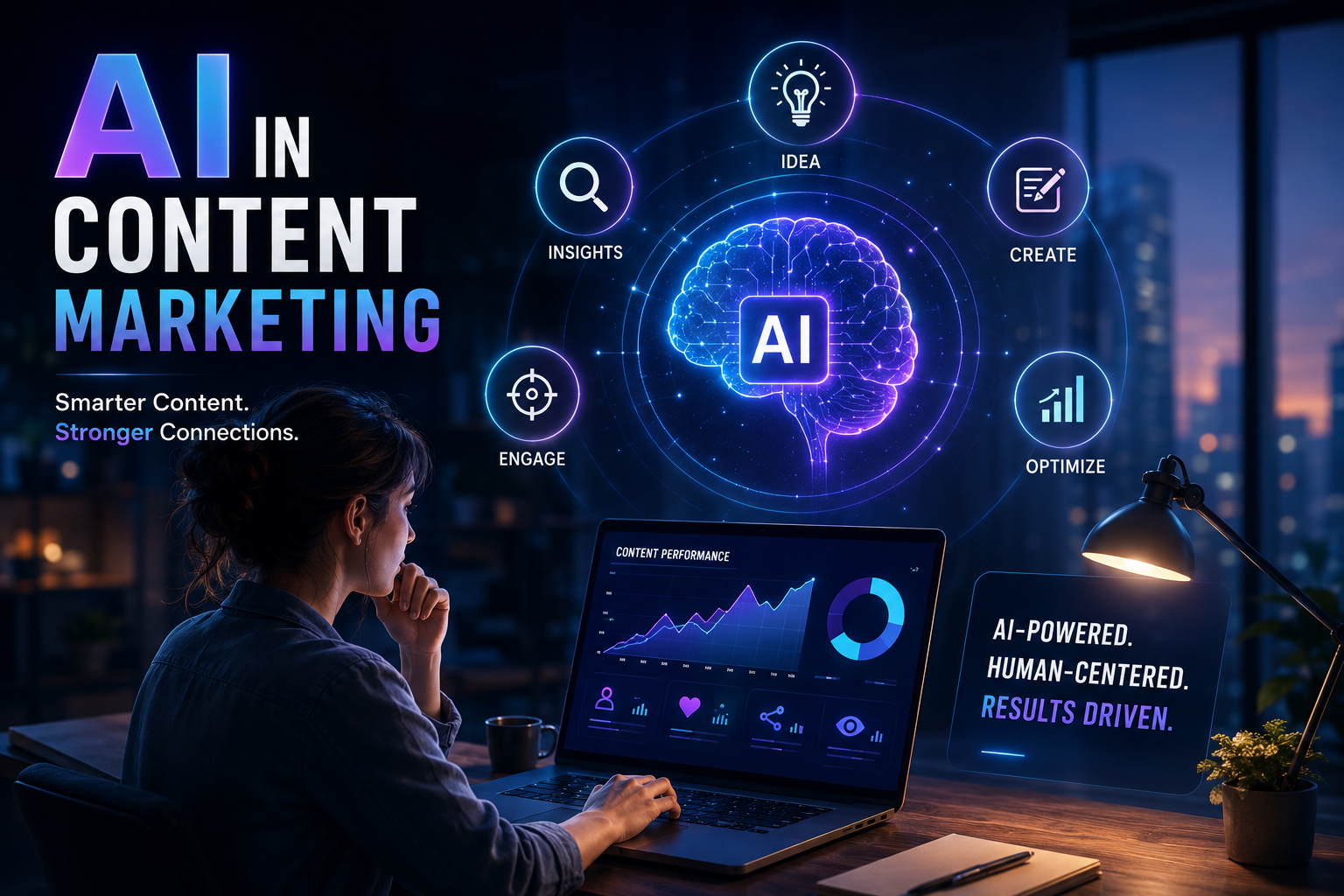
These capabilities allow businesses to produce video content at scale. As video consumption continues to rise, advanced content creation technologies will play a crucial role in helping brands meet audience demand without dramatically increasing production costs.
Companies that integrate these solutions into their video marketing strategy will be able to publish more content, engage larger audiences, and stay ahead of competitors. This approach helps businesses improve efficiency, maintain content consistency, and maximize marketing results.
Trend 5: AI-Powered Influencer Marketing
Influencer marketing has become one of the most effective ways to build trust and reach targeted audiences. However, identifying the right influencer has often been a challenge.
Advanced technologies are transforming this process by making influencer selection more data-driven and accurate.
Instead of focusing solely on follower counts, modern analytics platforms evaluate:
Audience demographics
Engagement quality
Authenticity levels
Conversion potential
Historical performance
Brands can use Artificial Intelligence-powered tools to identify creators who align closely with their target audience and campaign objectives.
Benefits include:
Improved campaign performance
Better return on investment
Reduced influencer fraud
More accurate audience targeting
By leveraging data-driven insights and performance analytics, businesses can make smarter partnership decisions, optimize influencer collaborations, and achieve stronger marketing outcomes.
Trend 6: Social Commerce Continues to Expand
Social commerce is transforming the customer buying journey.
Consumers can now discover, evaluate, and purchase products directly through social media platforms without leaving the app.
Major platforms continue investing heavily in shopping features, making social commerce one of the fastest-growing areas of digital marketing.
Modern technologies enhance social commerce by enabling:
Personalized product recommendations
Smart customer support
Predictive purchasing insights
Dynamic pricing strategies
Inventory optimization
As customers become more comfortable purchasing directly through social platforms, businesses must create seamless shopping experiences that reduce friction and increase conversions.
The integration of advanced automation and data-driven technologies into social commerce will play a major role in driving future growth. Businesses that combine social selling with strong customer engagement strategies will be better positioned for long-term success.
Trend 7: AI Chatbots Improve Customer Support
Customer expectations are evolving rapidly.
Modern consumers expect immediate responses regardless of the time of day.
Traditional customer support teams often struggle to provide around-the-clock service, creating opportunities for intelligent chatbots and automated support solutions.
Today’s virtual assistants can:
Answer customer questions
Recommend products
Process orders
Schedule appointments
Resolve common issues
Unlike earlier chatbot technology, modern conversational systems understand context and engage in more natural interactions. This improves customer satisfaction while reducing operational costs.
Businesses that implement Artificial Intelligence-powered support solutions can provide faster service, improve response times, and strengthen customer relationships.
Trend 8: Community-Led Marketing Gains Momentum
Consumers increasingly trust communities over traditional advertising.
As a result, brands are focusing on creating spaces where customers can connect, share experiences, and engage with one another.
Popular community platforms include:
- Facebook Groups
- Discord Communities
- LinkedIn Groups
- Telegram Channels
- Private Membership Networks
AI helps brands manage and grow these communities by analyzing conversations, identifying trends, and monitoring engagement patterns. Community-led marketing creates deeper customer relationships and encourages long-term loyalty. Businesses that use AI to understand community behavior can create more valuable experiences for their audience and strengthen brand advocacy.
Trend 9: Predictive Analytics Drives Smarter Decisions
One of the most powerful applications of AI is predictive analytics. Rather than simply analyzing past performance, predictive systems use historical data to forecast future outcomes.
- Customer behavior
- Content performance
- Advertising success
- Audience growth
- Emerging market trends
These insights help marketers make data-driven decisions before problems arise. Predictive analytics allows businesses to allocate budgets more effectively, identify growth opportunities, and improve campaign performance. As competition increases, organizations that leverage forecasting capabilities will gain a significant advantage.
Trend 10: Ethical AI and Transparency Become Essential
As advanced technologies become more integrated into digital marketing, consumers are demanding greater transparency from brands. Trust is increasingly becoming a key competitive advantage in a highly competitive online environment.
Businesses must clearly communicate:
How customer data is collected
How Artificial Intelligence is used
How personalization strategies work
Consumers are more likely to engage with brands that prioritize honesty, authenticity, and ethical marketing practices. Responsible use of emerging technologies will become even more important as regulations evolve and public awareness continues to grow.
Organizations that embrace transparency, protect customer privacy, and maintain ethical standards will strengthen trust, improve brand reputation, and build long-term customer relationships.
How Businesses Can Prepare for Social Media Marketing in 2026
To remain competitive in the rapidly evolving digital landscape, businesses must start adapting to emerging trends and technologies today. A proactive approach will help brands stay ahead of competitors and meet changing customer expectations.
Invest in Smart Marketing Tools
Adopt modern technologies that enhance content creation, analytics, automation, and customer support. These solutions can improve efficiency and help marketing teams achieve better results.
Prioritize Social SEO
Optimize social media profiles, captions, hashtags, and content to improve visibility in platform-based search results and increase organic reach.
Increase Video Content Production
Leverage modern content creation platforms to produce engaging videos, short-form content, and visual storytelling campaigns that resonate with audiences.
Build Strong Communities
Focus on meaningful engagement and relationship-building rather than vanity metrics. Strong communities help increase brand loyalty and customer retention.
Leverage Data-Driven Insights
Use analytics platforms and customer behavior data to make informed marketing decisions, optimize campaigns, and improve overall performance.
Implement Personalization
Deliver tailored experiences based on customer interests, preferences, and online behavior to improve engagement and conversion rates.
Adopt Predictive Analytics
Utilize forecasting tools to identify trends, anticipate customer needs, and make proactive business decisions.
Maintain Transparency
Ensure the ethical use of Artificial Intelligence and clearly communicate data collection and personalization practices with customers to build trust.
Businesses that embrace innovation and adapt to changing consumer behavior today will be better positioned to capitalize on the opportunities and challenges that social media marketing will bring in 2026 and beyond.
Summary
The future of social media marketing is being shaped by innovation, automation, and intelligent decision-making. At the center of this transformation are new digital solutions that are redefining how businesses create content, engage audiences, optimize campaigns, and drive growth.
From content generation and personalization to social commerce and predictive analytics, these developments are influencing every aspect of digital marketing. Companies that embrace these solutions will be able to improve efficiency, increase engagement, and deliver better customer experiences.